From the desk
No large dealer group reported between mid-August and the close of this issue, so the tape came from upstream. Malibu Boats closed fiscal 2026 on 27 August with fourth-quarter net sales of $295.5 million, up 42.7%, unit volume up 19.2% to 1,456 boats, $61.2 million of that from the new Saxdor segment, and gross margin of 17.7% — a shipment number, not a retail number, and management attributed part of it to "firming dealer inventory levels in pockets of the portfolio" (SEC). Brunswick raised full-year adjusted earnings guidance to $4.35–$4.75 per diluted share, with roughly $40 million of incremental tariffs offset in part by $25–30 million of net refunds under the International Emergency Economic Powers Act (SEC). Patrick Industries grew marine revenue 22% while its recreational vehicle end market fell 15% (SEC). The retail number that governs all of it has not moved: new powerboat retail unit sales were 214,292, down 7.1% on a rolling twelve-month basis through April, and the Conference Board index fell to 89.4 in August with the expectations component at 68.2 (NMMA, NMMA).
Last month's issue argued that margin and mix were carrying the dealer tier while volume fell. The second-order consequence has now arrived, and it is structural rather than seasonal: the capital is being spent upstream — MasterCraft absorbing Marine Products, Patrick Industries and LCI Industries combining, Malibu buying Saxdor — while the distress is being absorbed downstream, at West Marine and at single-location operators. This issue argues three things. First, wholesale is being restocked ahead of retail, and the model-year 2027 order book is where that gets settled. Second, the financing window that MarineMax, Malibu and OneWater used between June and August is not obviously open at the same price into 2027: the July Federal Open Market Committee minutes record participants who wanted a hike, and market pricing for a 25 basis-point increase by September (Federal Reserve). Third, in the large-yacht market value is rising on falling volume, which is a mix story, not a demand story, and it does not help anyone holding a fifteen-year-old 30-metre. Our dashboard closes with early-September data; the Cannes and Monaco results are not yet in these numbers.
Featured story: Consolidation Moved Upstream
The deals are being signed above the dealer tier
Dealer-tier mergers and acquisitions have been quiet since the spring. The ownership map above the dealer, however, has changed materially in four months. MasterCraft completed its acquisition of Marine Products Corporation on 15 May, with Marine Products holders receiving $2.43 per share in cash plus 0.232 MasterCraft shares, leaving MasterCraft holders with 66.5% and Marine Products holders with 33.5% of the combined company in a transaction valued at roughly $232.2 million (SEC, Trade Only Today). Chaparral and Robalo now sit beside MasterCraft and Crest in one dealer-facing organisation.
On 30 June, Patrick Industries and LCI Industries agreed an all-stock merger: LCI holders receive 1.2440 Patrick shares each, giving pro forma ownership of 52% Patrick and 48% LCI, a combined enterprise value of about $7.7 billion, pro forma revenue above $8.1 billion, $150 million of expected run-rate cost synergies within three years, pro forma net leverage of 2.1 times, and a target close in the first half of 2027 subject to shareholder and regulatory approval (Patrick and LCI transaction site, SEC). For a builder, that is a consolidation of the people who supply seating, glazing, towers, electrical harnesses and trailers. For a dealer, it is a consolidation of the aftermarket and parts channel behind the service department.
Malibu did the same thing in miniature. Saxdor contributed $61.2 million of net sales and 180 units in the June quarter at $339,811 per unit, and the first domestically built Saxdor boats are expected out of Fort Pierce, Florida in the first half of fiscal 2027 (SEC). A European brand becoming a Florida-built brand changes duty exposure, lead times and the dealer agreement all at once.
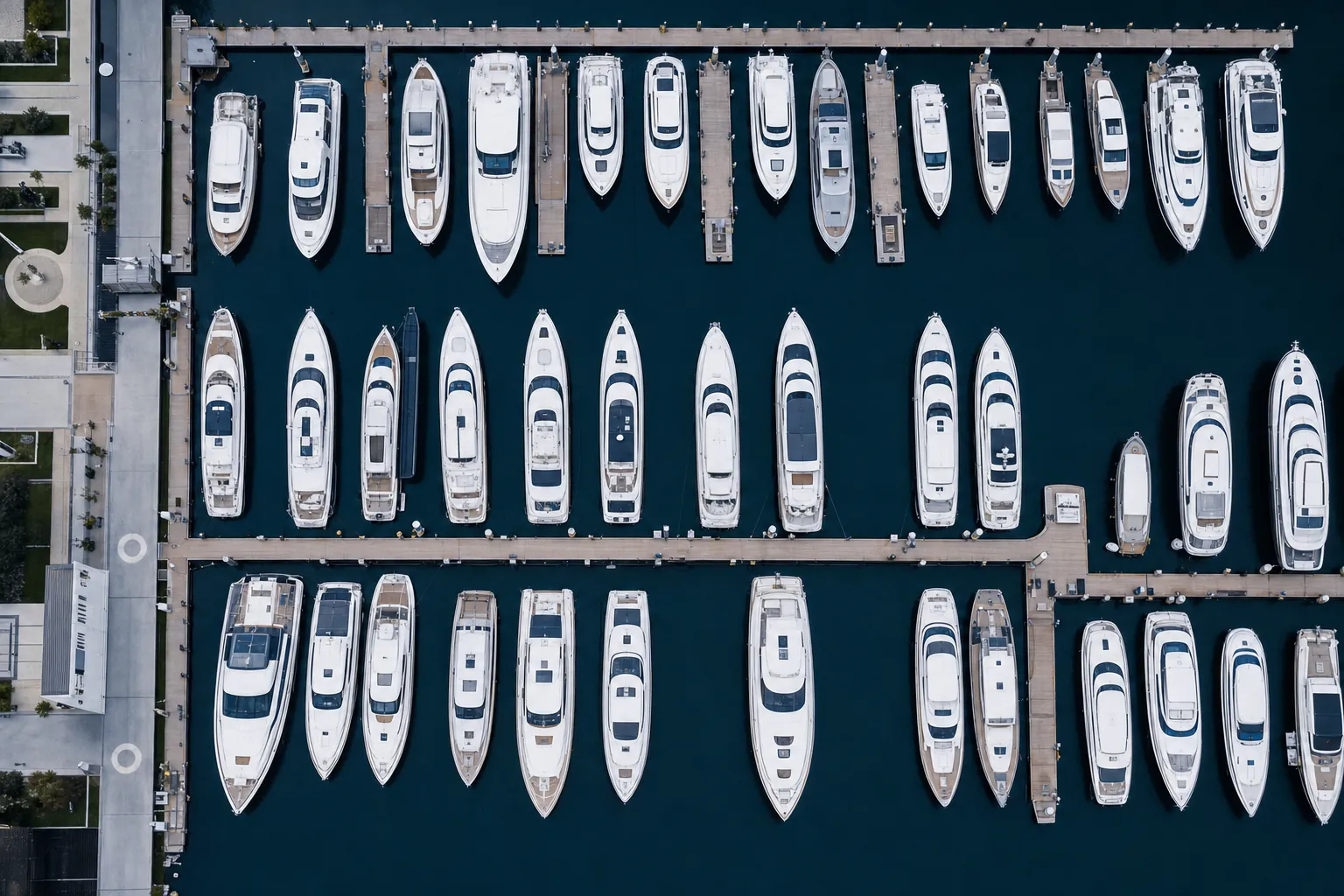
The restock is arriving before the recovery
The June-quarter shipment numbers are the ones to argue about. Malibu's Cobalt segment shipped 31.0% more revenue and 18.9% more units, and Saltwater Fishing shipped 11.1% more revenue on 2.2% more units, both attributed to firming dealer inventory; the Malibu-branded segment shipped 2.5% fewer units on lower retail activity (SEC). Brunswick reported first-half United States retail roughly flat once adjusted for its own value-model rationalisation, and described boat and engine pipelines as lean and fresh (SEC). Retail registrations, meanwhile, are down 7.1% on a rolling twelve-month basis (NMMA).
Both things can be true — pipelines can be lean in aggregate while individual rooftops take more units than they will retail — and that is precisely the 2022 pattern in miniature. The dealer-side evidence says the discipline is real for now: MarineMax inventories fell 13.0% to $788.6 million and OneWater's fell to $485.5 million from $517.1 million (SEC, SEC). The pressure point is the independent who accepts a model-year 2027 allocation to protect a brand relationship that may be owned by a different company by the time the boats land.
Malibu's own framing of the demand side is the sentence to keep: the company said it is contending with macro disruption that continues to pressure the payment buyer, a near-term headwind to an inflection in the cycle (SEC). Consumers' average twelve-month inflation expectation rose to 5.8% in August and a majority still expect rates to rise (NMMA). Nothing in that mix retails a 24-foot sterndrive at 9% on 180 months.
Who refinanced, and who ran out of time
The same six months that produced the upstream deals produced a refinancing window, and the larger balance sheets used it. MarineMax completed a refinancing of $1.49 billion of senior secured credit facilities, extending maturities to 2031, expanding the revolver and lowering borrowing costs; interest expense fell to $14.3 million from $16.9 million (SEC). Malibu closed a credit agreement refinancing in July that extends maturity through 2031 and authorised a $70 million repurchase programme for fiscal 2027 (SEC). OneWater hit its leverage target early, at 3.7 times trailing adjusted earnings before interest, taxes, depreciation and amortisation, against 5.8 times a year earlier (SEC).
Below that line, the outcome was different. West Marine's Chapter 11 has now closed 59 stores plus a further 32 — 91 in total, roughly a quarter of the chain — after an asset auction drew no qualified bids on 7 July; the pre-arranged plan converts about $251.2 million of term loan claims into all of the equity of the reorganised company against total outstanding obligations of $429.3 million (TheStreet, court docket). On 5 August, Fort Lauderdale's Fastboats.com Sales Company, trading as FB Marine Group, filed under Subchapter V listing over $1.7 million of assets against about $2.6 million of liabilities, with gross revenue down from over $18.4 million in 2024 to over $15 million in 2025 (TheStreet).
Read those two paragraphs together and the credit market's message is legible. Scale refinanced at lower cost with maturities pushed to 2031. Sub-scale accessory retail and single-location brokerage-and-service businesses were restructured or liquidated. There is no middle path being offered at the moment, which is what makes an unhedged model-year 2027 order commitment an expensive way to demonstrate loyalty.
Key takeaway
Between May and August the industry's ownership map changed more than its retail demand did. Do two pieces of arithmetic this week. First, count how many of your top five franchises are now owned by a company that also owns a competitor's core brand — for Chaparral and Robalo dealers the answer changed on 15 May, and for anyone buying components the Patrick–LCI close in the first half of 2027 will change it again. Second, compare wholesale units received at your rooftops over the last two quarters against your own retail registrations over the same period. If shipments grew faster — as they did for Malibu's Cobalt and Saltwater segments, up 18.9% and 2.2% in units while industry retail ran down 7.1% — then you are financing someone else's restock at a floorplan rate that the July Federal Open Market Committee minutes suggest is more likely to rise than fall. The dealers who came out of the last cycle intact were the ones who took the allocation fight in September rather than the discount fight in March.
Economic indicators and risk
United States
- New powerboat retail unit sales, rolling twelve months to April214,292 units · −7.1%
- Conference Board Consumer Confidence Index, August89.4 · expectations component 68.2
- Federal funds target range after the 28–29 July meeting3.50–3.75% · unchanged, three participants favoured a hike
- MarineMax gross margin, fiscal third quarter35.7% · +530 basis points
- MarineMax inventories at 30 June$788.6M · −13.0%
- OneWater adjusted net debt leverage3.7× · from 5.8× a year earlier
- Malibu Boats net sales, fiscal fourth quarter$295.5M · +42.7% (units +19.2%)
- Patrick Industries marine revenue, second quarter+22% · marine content per unit +22% (trailing twelve months)
- Brunswick full-year 2026 guidance, adjusted diluted earnings per share$4.35–$4.75 · raised, incremental tariffs ~$40M
- West Marine store closures under Chapter 1191 stores · $251.2M term loan converted to equity
Sources: NMMA, NMMA, Federal Reserve, MarineMax 8-K, OneWater 8-K, Malibu Boats 8-K/A, Patrick Industries 8-K, Brunswick 8-K, and TheStreet.
Global
- Superyacht brokerage sales value, first half 2026€4.05B · from €3.61B in first half 2025
- Sales of 50–70 metre yachts, first half26 sales · +52.9%
- Pre-owned 24-metre-plus sales value, first half$3.51B · +15% on 8% fewer transactions
- Pre-owned superyachts listed for sale at 1 July2,157 · 17% of the global fleet
- Superyachts under construction at 1 July936 hulls · 466 due for delivery in 2026 against 411 in 2025
- Charter departures commenced, second quarter2,884 charters · +40.1%
- Charter bookings taken, second quarter3,390 bookings · −5.5%
- Indicative Red Sea war risk premium, 20 July~0.75% of hull value · from ~0.30%
Sources: Monaco Life, Northrop & Johnson, and Insurance Journal.
Risk watch
United States
The rate assumption most dealers are still carrying is wrong in direction. The 28–29 July meeting held the target range at 3.50–3.75%, but the minutes record participants who favoured raising it, market pricing for a 25 basis-point increase by September, nominal Treasury yields up 25 to 30 basis points over the intermeeting period, and staff estimates of total personal consumption expenditures inflation at 3.7% in June with core at 3.3% (Federal Reserve). Floorplan and retail paper priced off that curve gets more expensive, not less, in the quarter when model-year 2027 units land. Demand is not improving into it: retail is down 7.1% on a rolling twelve-month basis and confidence fell to 89.4 in August with the expectations index at 68.2, below the 80 line historically associated with elevated recession risk (NMMA, NMMA). Two further exposures deserve naming. Tariff accounting is flattering the propulsion and accessory tape — Brunswick expects $25–30 million of net refunds under the International Emergency Economic Powers Act this year against roughly $40 million of incremental tariffs (SEC) — and the refund mechanism itself remains contested on appeal following the Supreme Court's February decision, so treat those credits as non-recurring and unsecured (Morgan Lewis). And the weather comfort is genuine but thin: Colorado State's 10 June outlook cut the season to 11 named storms, five hurricanes and an accumulated cyclone energy index of 70 against a 123 average, with a 24% chance of a major hurricane landfall on the continental coastline versus a 43% long-period average (Colorado State University). A quiet season does not reprice your named-windstorm deductible, and it will not rescue a rooftop carrying 2027 units it did not need.
Global
Three exposures dominate the coming quarter. First, war risk and routing. Indicative Red Sea premiums roughly doubled to about 0.75% of hull value after the Houthi blockade announcement of 20 July, with underwriters treating Saudi-linked tonnage as high risk, piracy rising in the Gulf of Aden, and a full closure of Bab el-Mandeb assessed as capable of removing 7% of global oil supply; the underlying conflict with Iran has been running since 28 February (Insurance Journal). That reaches yachting through delivery voyages, Indian Ocean repositioning, crew cover and fuel, and it is showing up in cruising-area endorsements before it shows up in hull rates. Second, charter behaviour. Fleet data are better than the anecdote: second-quarter departures rose 40.1% to 2,884 and first-half market days booked rose 42.6%, but bookings taken in the quarter fell 5.5% to 3,390, 36.7% of second-quarter booking activity was for same-month or next-month departures, and the western Mediterranean, eastern Mediterranean and Adriatic together carried 81.1% of starts (Northrop & Johnson). Against that, brokers told CNBC in July that Mediterranean summer charters were running 20% to 30% below last year with July and August discounting (CNBC). Both can hold: volume is being bought late and cheap, which destroys yield forecasting more effectively than an outright decline. Third, supply into a selective bid. There were 2,157 pre-owned yachts for sale at 1 July, 17% of the global fleet, alongside 936 hulls in build and 466 deliveries scheduled for 2026 against 411 last year, tapering to 301 in 2027; price reductions rose 5.9% to 1,117 in the half, the 30-to-40-metre band saw sales fall 6%, sailing yacht sales value fell 47% to $79.5 million, and the 25-to-29-year age cohort combines the longest time on market with the deepest cuts (Northrop & Johnson). Headline value is up — €4.05 billion in the half on 281 sales of 24 metres and above (Monaco Life) — but that is large-tonnage mix, not liquidity for aged mid-size stock.
Three action steps
Renegotiate your model-year 2027 allocation against your own retail, not your builder's shipment plan.
Pull retail registrations by brand for your rooftops for the twelve months to August, then set that against units received. The industry benchmark is minus 7.1% (NMMA); the shipment benchmark from the June quarter was Cobalt units up 18.9% and Saltwater up 2.2% on firming dealer inventory (SEC). Where your received units exceeded your retail, ask for the allocation to be cut before Fort Lauderdale opens on 28 October (FLIBS guide) rather than asking for programme money in February. Get the reduction in writing alongside curtailment relief and interest assistance terms, and confirm which entity you are contracting with — for Chaparral and Robalo that counterparty changed on 15 May (Trade Only Today).
Stress-test floorplan and retail paper at a higher rate, and take the maturity extension if it is offered.
The July minutes show market pricing for a 25 basis-point increase by September and Treasury yields up 25 to 30 basis points over the intermeeting period (Federal Reserve). Run your 2027 plan at plus 100 basis points on floorplan and check the covenant headroom that assumption consumes. The comparables are public: MarineMax refinanced $1.49 billion of senior secured facilities to 2031 at lower cost while cutting interest expense to $14.3 million (SEC), Malibu extended maturities to 2031 in July (SEC), and OneWater reached 3.7 times leverage from 5.8 times (SEC). Lenders who priced those deals are the same lenders who let a $429.3 million obligation at West Marine convert to equity (court docket). Extension is worth more than a 25 basis-point coupon saving this cycle.
Re-cut your brokerage listings by age band and reduce once, properly, before Monaco week.
Aged inventory is where the mid-market pain is concentrated: 2,157 pre-owned yachts of 24 metres and above were listed at 1 July, 17% of the global fleet; price reductions rose 5.9% to 1,117 in the half while average reduction size eased from $1.7 million to $1.4 million; hulls aged one to fourteen years sell faster with smaller cuts, and the 25-to-29-year cohort carries both the longest time on market and the deepest discounts (Northrop & Johnson). Sort your central agency list into those bands, and for anything past fourteen years quantify the refit reserve a buyer will negotiate against before you set the number. For reference on what pricing alignment buys you: the largest transaction of the half, the 99.9-metre Feadship Moonrise, sold in 159 days at a €325 million asking price. Monaco runs 23–26 September and is the last high-traffic viewing window before Fort Lauderdale (SuperYacht Times).
Industry player profile: MasterCraft Boat Holdings
The first real test of whether builder-tier consolidation delivers anything to the dealer who has to retail the boats.
MasterCraft entered 2026 as a three-segment builder with a conservative balance sheet and left the spring as a four-brand platform. Its fiscal second quarter, reported on 5 February, showed net sales of $71.8 million, net income of $2.5 million, adjusted earnings before interest, taxes, depreciation and amortisation of $7.5 million, roughly $81 million of cash and investments, no debt, and channel inventories down 25% year over year (SEC).
On the same day it agreed to combine with Marine Products Corporation, the builder of Chaparral and Robalo, in a cash-and-stock transaction that closed on 15 May: $2.43 per share in cash plus 0.232 MasterCraft shares, 66.5% and 33.5% pro forma ownership, and an announced value of about $232.2 million (SEC, Trade Only Today). Marine Products brought a debt-free balance sheet of its own, with $45.8 million of cash at 31 March (SEC). The combined group now spans wake, pontoon, sterndrive and saltwater outboard, which is close to the full spread of the freshwater and coastal dealer's floor.
Why it matters now
Every consolidation argument made upstream this year — complementary portfolios, shared insight, scaled investment, best-practice transfer — is being made to dealers who mostly want two things: fewer duplicated brand meetings and better parts fill rates. MasterCraft's own communications to dealers and vendors in February promised continuity of teams, processes and go-to-market approach (SEC). The first fiscal year in which that promise can be tested against service metrics is the one now under way.
The financial stakes are modest by industry standards and instructive for exactly that reason: this is a debt-free acquirer buying a debt-free target in a market where retail is down 7.1% (NMMA) and where the accessory retail tier is being restructured in Delaware. If a balance sheet like this cannot convert consolidation into dealer-visible service and margin improvement, the more leveraged combinations behind it — Patrick and LCI among them — will find it harder.
Watch for
The fiscal fourth quarter and full-year results were scheduled for a pre-market release on 10 September with a call at 8:30 a.m. Eastern (Business Wire). Three things to read in it. Whether the channel-inventory discipline that produced a 25% year-over-year reduction earlier in the year survived the first quarter of combined shipments. Whether Chaparral and Robalo wholesale followed the Malibu-style restock pattern — Cobalt units up 18.9% in the same June quarter (SEC) — or held flat. And what the company discloses about dealer-agreement consolidation where one dealer now holds two of its brands.
Beyond the print: transaction and integration costs against the synergy case, any change to the no-debt position now that cash has partly funded the acquisition, and order intake at Fort Lauderdale from 28 October (FLIBS guide), which is the first show where the combined lineup meets the buying public as one company.
Voices from the field
This desk publishes numbers, and the numbers we cannot get from a filing are the ones our readers hold. For the November issue we are collecting three specific things. Floorplan term sheets renewed since July — rate, curtailment schedule, aging triggers and any change in interest assistance — anonymised, so we can show whether the pricing MarineMax and Malibu obtained through 2031 reached the two-rooftop operator. Days on market by age band and by length for brokerage listings closed since June, so we can test the large-yacht pattern against the 12-to-24-metre market where most brokers actually work. And charter booking lead times from managers and central agents, given that 36.7% of second-quarter booking activity was for same-month or next-month departures.
We also want the counter-argument. If your model-year 2027 allocation is right-sized and retailing, say so and show the turn. If war-risk and cruising-area endorsements have moved on your fleet since 20 July, tell us by how much and on what class of vessel. Submissions run under a house byline or under your own; figures are published only with a document behind them, and we will say when we could not verify something. Send material through your usual contact at the desk before the third Friday of the month, and flag anything that is commercially sensitive so we can aggregate it rather than quote it.
Sources cited inline with links. Data as of late August / early September 2026. Helm & Horizon is published by The Walton Group, Inc. and is not investment advice.